Mining · Buyer’s guide
Which Bitaxe to buy
Updated 22 September 2026
The Bitaxe is no longer a single board. There are several of them now, built on a few different Bitmain chips. And a set of cousins from other designers stack four, six or eight of those same chips onto one unit. Most of the confusion is just the names. Learn which chip sits on which board and the whole range sorts itself out in about a minute.
What a Bitaxe actually is
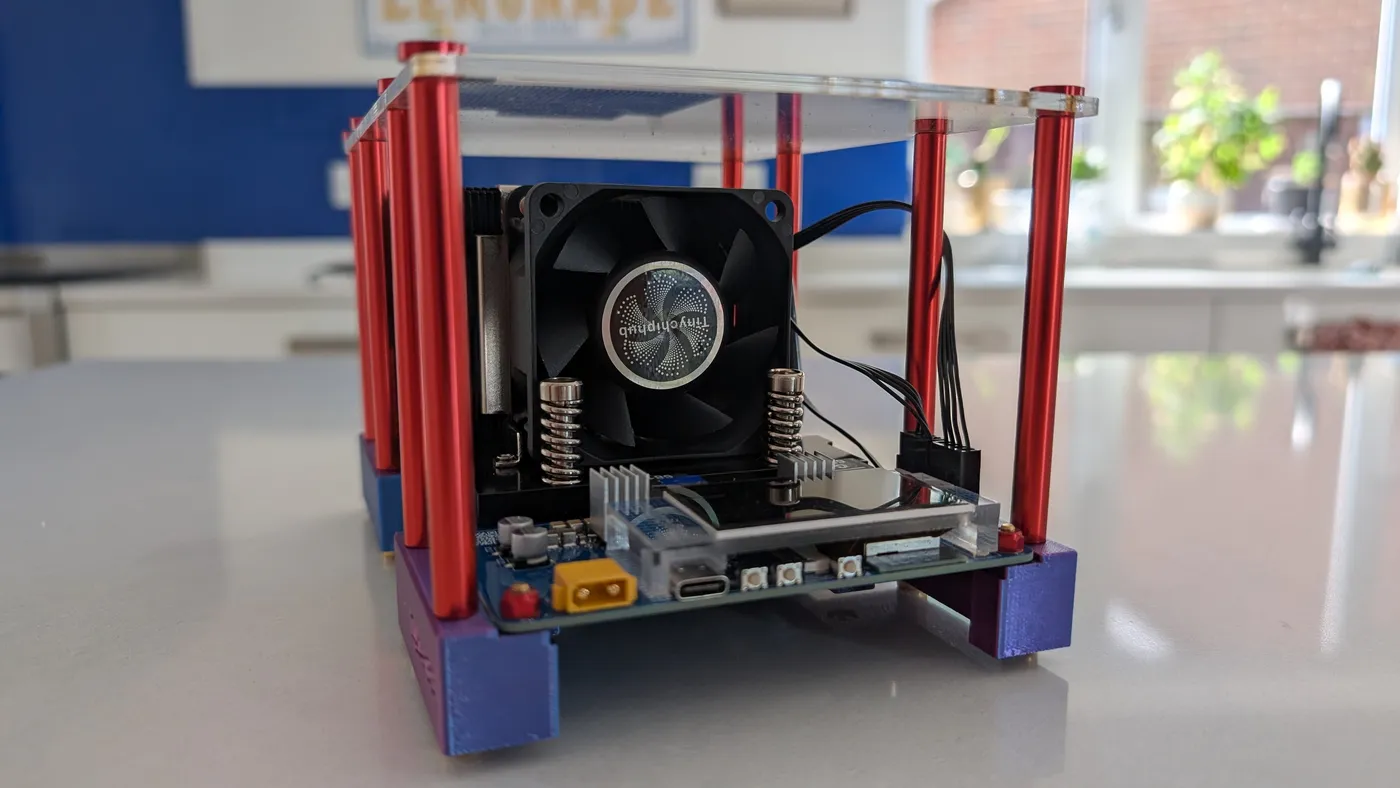
The Bitaxe is an open-source board you can build yourself or buy ready-assembled, and the design is MIT-licensed, so it is public. One Bitmain ASIC does the mining, an ESP32 runs the AxeOS firmware to drive it, and a heatsink and fan keep it cool. You put it on your wifi, point it at a pool through its web page, and it hashes.
The detail people miss is where the chips come from - worth knowing before you buy. The BM1370 in the current Gamma is not something you can order in a reel. The project's own repository puts it plainly: the chip is not available individually yet, and the best place to get one is out of an Antminer S21 Pro. Whole industrial miners are bought and stripped so that these little boards can exist.
That has two consequences for a buyer. Supply is lumpy, and price follows the second-hand Antminer market rather than a normal component supply chain. And "genuine Bitaxe" is a slightly odd idea, because the design is open by intent - anyone may build one. What varies is the quality of the assembly and whether the vendor will help you when it doesn't boot.
The odds, up front
A Bitaxe will not pay for itself. I would rather put that in the third paragraph than the last one.
At roughly 1.2 TH/s against a network sitting near 946 EH/s, solo mining a block with a single Gamma is a once-in-tens-of-thousands-of-years proposition. That is the deal, and people buy them anyway because the payout if it lands is a whole block, and because the hardware is a pleasure to own. Our lottery-odds calculator does the actual sum for whatever device you are considering, and the solo mining piece does the sum without flattering it.
If you want the cross-category version of this decision, including the Avalon Nano and the Apollo, that is the best lottery miner guide. This page is about the Bitaxe family specifically.
The chips decide everything
Every meaningful difference between Bitaxe models comes down to which Bitmain chip is on the board and how many of them. Learn this table and the product names stop mattering.
| Model | Chip | Harvested from | TH/s | J/TH | In short |
|---|---|---|---|---|---|
| Ultra (200 series) | BM1366 | Antminer S19 XP | ~0.5 | ~22 | Superseded. Only worth it very cheap, second hand. |
| Supra (400 series) | BM1368 | Antminer S21 | ~0.7 | ~17 | The entry point most people should start at. |
| Gamma (600 series) | BM1370 | Antminer S21 Pro | ~1.2 | ~15 | The efficiency pick, and the one I would buy. |
| GT / Gamma Turbo (800) | 2x BM1370 | Antminer S21 Pro | ~2.0 | ~17 | Double the chips, near enough the same footprint. |
| Hex | 6x BM1370 | Antminer S21 Pro | ~3.0 | ~18 | Most hashrate on one board. Louder, and a real power supply. |
Hashrate and efficiency are stock figures. All five overclock, the Gamma most of all.
The generational jump is the BM1366 to the BM1370. The older chip is a 2022-era part; the BM1370 is 5nm silicon out of Bitmain's most efficient miner, and it roughly doubles the hashrate per watt. That is why the Gamma is the board worth having and the Ultra is only worth buying if somebody is nearly giving it away.
The model ladder, and what we hold
These are the boards with a hub on this site, with the figures we have recorded for each. Prices are indicative and move with the second-hand Antminer market - follow through for the live number.
| Device | TH/s | Watts | J/TH | Indicative | |
|---|---|---|---|---|---|
| TinyChipHub Zyber 8S | 6.4 | 140 | 21.9 | £135 | Details → |
| NerdQaxe++ | 4.8 | 76 | 15.8 | £299 | Details → |
| Bitaxe Touch | 2.15 | 43 | 17 | £199 | Details → |
| Bitaxe Gamma 601 | 1.2 | 18 | 15 | £79 | Details → |
| Lucky Miner LV07 | 1 | 25 | 25 | £79 | Details → |
| Bitaxe Supra | 0.7 | 12 | 17 | £69 | Details → |
| NerdMiner V2 | 0.000077 | 1 | - | £25 | Details → |
Buy the Gamma. That is the answer for almost everybody. Best efficiency in the family, the most overclocking headroom, and a small enough premium over the Supra that saving the difference is a false economy. The Supra is the sensible fallback if the Gamma is out of stock, which happens more than you would expect for the supply reasons above.
The Touch is the same idea with a screen and two chips, and whether that is worth the money depends entirely on whether you want to look at it. Mine sits where I can see it, so I understand the appeal.
The multi-chip cousins
Once you accept that a board can hold more than one chip, a second family appears. These are not Bitaxes - different designers, different firmware - but they run the same Bitmain silicon and fill the gap between a desk toy and a real miner.
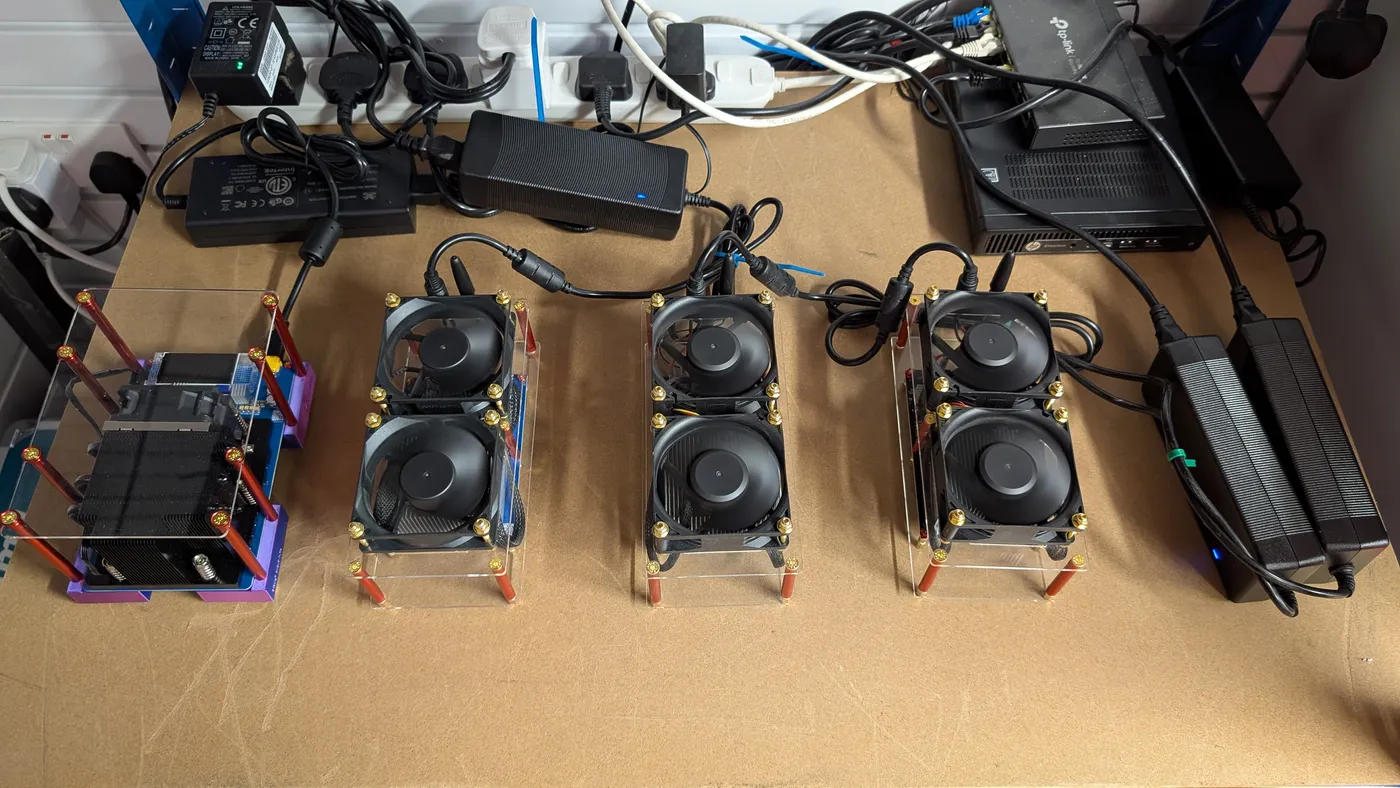
The NerdQaxe++ puts four BM1370s on one board for about 4.8 TH/s at 76W, and it is the quiet one: four times the hashrate of a Gamma at four times the power, in a single unit you plug in once. The Zyber 8S takes it to eight chips and 6.4 TH/s at 140W. I run one. There is an eight-chip NerdOctaxe in the same territory.
At the other end, the Lucky Miner LV07 is a Bitaxe-alike at around 1 TH/s, and the NerdMiner V2 is not really a miner at all - it hashes at a few hundred kilohashes on an ESP32, which is a rounding error. Buy that one as a desk ornament that happens to be pointed at Bitcoin, and enjoy it on those terms.
The rule across all of them: compare J/TH, not price. A device with worse efficiency costs you every hour it runs, and over a couple of years that gap is larger than the difference in purchase price.
Buying one without getting stung
Open hardware means anybody can build one, and most sellers are good. A few things to check:
- Which chip, stated plainly. If a listing says "Bitaxe" with no chip named, ask. The difference between a BM1366 and a BM1370 board is the difference between a superseded device and a current one, and the photos look similar.
- The power supply is not an accessory. The single-chip boards want a proper 5V supply on a 5.5x2.1mm barrel jack, and underfeeding one is the most common cause of a board that hashes for ten minutes then restarts.
- Cooling is the difference between stock and overclocked. The Gamma's headroom is real but only with a case that moves air. A bare board on a desk will throttle.
- Buy from someone who answers emails. These are hand-assembled boards. The chance of needing support is not zero.
I buy from Solo Satoshi, who assemble properly and ship to the UK. That is an affiliate link and it costs you nothing.
Discount codes
Three of the shops I link to gave me a code to pass on, and I'd rather put them here than make you hunt for a coupon site. Power Mining's is the biggest at 10% and covers the Gamma, Supra, Touch and the NerdQaxe++. TinyChipHub's 5OFF works on everything they sell (every Bitaxe I own, and my Zyber, came from there), and Mineshop's is a modest 3% for anyone buying inside the EU. Solo Satoshi don't run a code, so that one is a plain link.
Discount codes
Codes go in the coupon box at checkout. The links are affiliate links - the discount is yours either way, and buying through them costs you nothing extra.
None of them changes which board I'd tell you to buy. Pick the Gamma, then pick the shop by where it ships from and whether they answer emails - the code is a few pounds on top, not the reason to choose.
Living with it
Quieter than people expect. A single-chip Bitaxe with a 40mm fan is about as loud as a laptop working hard, and the multi-chip boards are noticeably louder without being a problem in a room you are not sleeping in.
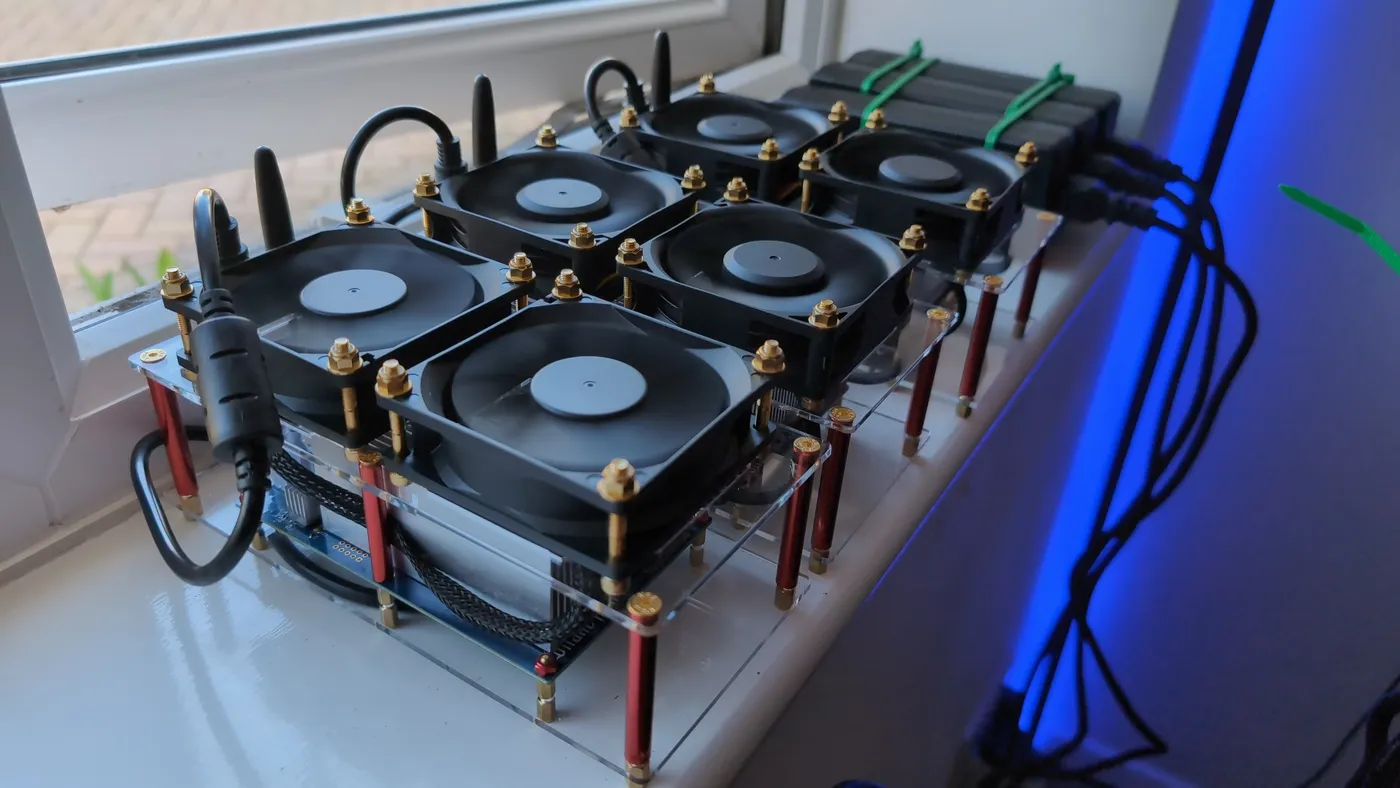
Heat is a feature for part of the year. A Gamma at 18W is nothing; a Zyber at 140W is a small radiator, and in a British winter that is a bonus rather than a cost. In July it's the opposite, which is worth thinking about before you buy the bigger board.
Once it's running, point it somewhere sensible. Our solo pool guide covers the choices, the stratum ping test will tell you which of them your connection actually reaches quickly, and the overclocking piece has the settings people run once they stop leaving it on stock.
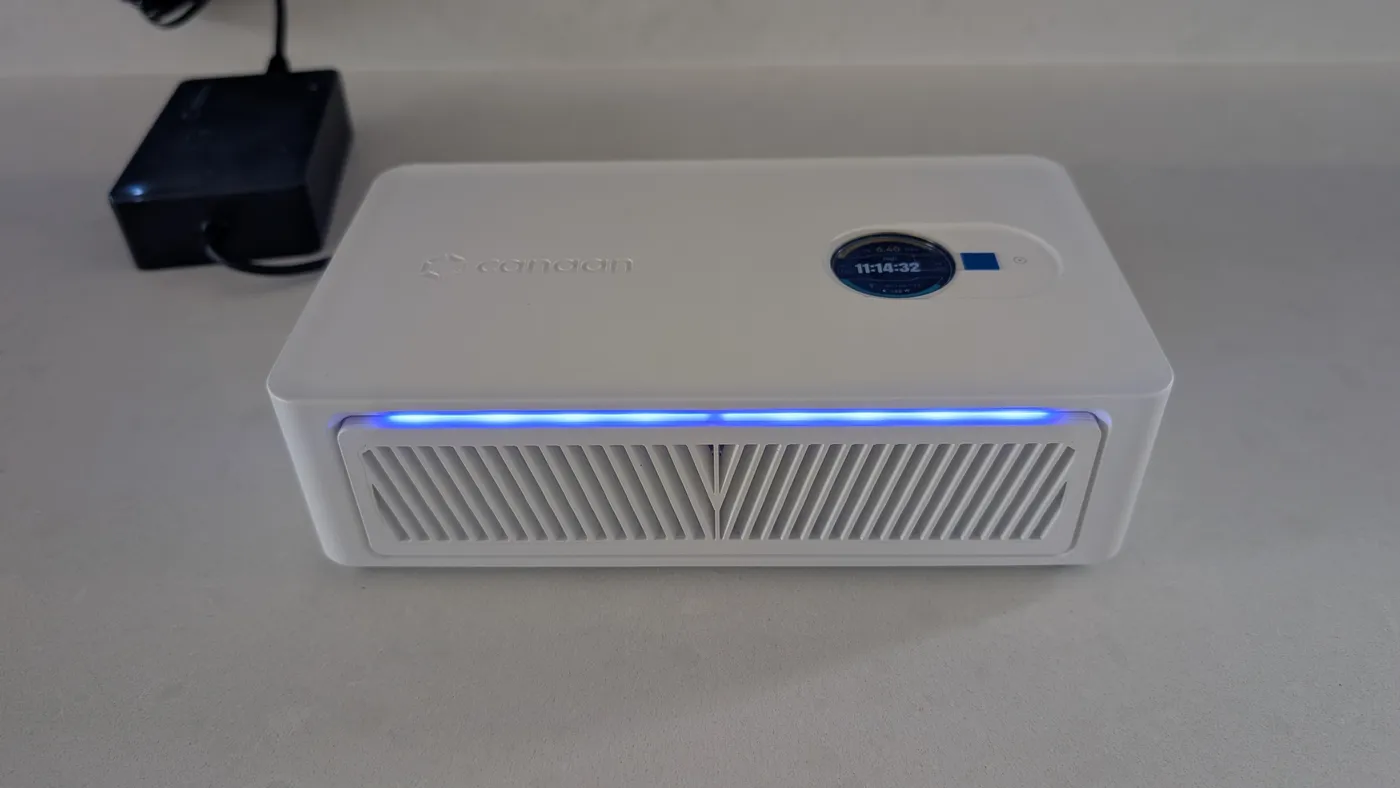
For context on where I'm writing from: my own kit is two Bitaxe Supra Hexes, a Bitaxe Hex, a Zyber 8S, three Avalon Nano 3S and a Mini 3 that ticks along in night mode at about 24 TH/s, which between them cover most of the ways you can approach this. The Bitaxe-class boards are the ones I would recommend first to somebody starting, and the Avalons are what I reach for when I want something that runs without me thinking about it.
Still deciding whether a Bitaxe is even the right shape of thing? The lottery miner guide puts it next to the Avalon Nano and the Apollo, which solve the same problem differently.